
Freewriting vs Mind Mapping — Which Brainstorming Method Works Better for Essays?
Freewriting and mind mapping both work for essays, but they solve different early-stage problems. Use freewriting when you need momentum and raw material from a broad prompt. Use mind mapping when you need to see relationships, organize ideas, and narrow to a clearer, arguable angle. A strong default sequence is: freewrite to generate options, then mind map to shape and choose one defensible thesis direction.
Why This Matters
Writers often lose time because prompts feel too broad, their ideas feel generic, and they struggle to commit to a thesis direction. Picking the right brainstorming method (or sequence) reduces second-guessing, speeds up the move from vague ideas to a specific angle, and makes outlining and evidence selection easier—supporting faster drafting and more confidence that the essay has a defensible point of view.
The Generate–Shape–Commit Method
Framework Steps
- Diagnose your stuck point: Identify whether you’re stuck because you have too few ideas (you need generation) or too many unfocused ideas (you need structure and narrowing). Choose the method that matches the problem.
- Generate with freewriting (quantity first): Write continuously to surface possible positions, tensions, and questions inside the prompt. Don’t organize yet; focus on producing options.
- Shape with mind mapping (connections + narrowing): Pull the most promising fragments from your freewrite and map related claims, sub-claims, and implications. Look for a cluster that is specific and arguable.
- Commit to an angle and thesis direction: Select one cluster and state it as a clear, defensible angle. Make sure it’s distinct enough to defend and scoped enough to build evidence around.
- Stress-test for clarity and scope: Confirm the angle isn’t generic or overly broad and that it naturally suggests an outline (major reasons, a counterpoint, or key dimensions) before drafting.
Use Essay Angle Finder to turn your broad prompt and brainstormed notes into a clear, defensible essay angle—so you can lock in a thesis direction and start drafting faster with confidence.
Real-World Example
A student receives a broad essay prompt and feels stuck because every idea sounds generic. They freewrite briefly to surface multiple possible directions (including questions and tentative claims). Then they extract the most interesting phrases and build a mind map around them. The resulting clusters make it easier to pick one specific, arguable angle, which then supports a clearer outline and more confident drafting.
Common Mistakes
- Freewriting for a long time but never extracting a specific, arguable angle from it.
- Mind mapping immediately from a broad prompt, creating generic categories instead of defensible claims.
- Trying to do both methods at once, resulting in neither strong idea generation nor clear structure.
- Refusing to commit to one direction, leading to endless brainstorming and delayed drafting.
- Starting the draft without stress-testing scope, causing an unfocused structure.
FAQ
What is freewriting?
Freewriting is a brainstorming technique where you write continuously for a set period without worrying about grammar or structure. The goal is to generate raw ideas and material.
What is mind mapping?
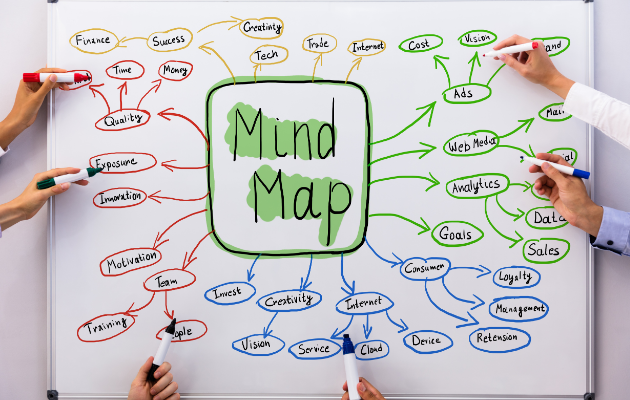
Mind mapping is a visual brainstorming technique that involves creating a diagram to connect related ideas and concepts, helping to organize thoughts and identify relationships.
When should I use freewriting over mind mapping?
Use freewriting when you feel stuck and need to generate a variety of ideas from a broad prompt. It’s best for producing raw material before organizing your thoughts.
When should I use mind mapping over freewriting?
Use mind mapping when you have several ideas but need to organize and narrow them down to a specific, arguable thesis direction.
Can I use both methods together?
Yes, using both methods in sequence can be very effective: freewrite first to generate ideas, then mind map to organize and refine those ideas into a coherent thesis.
Related Questions
- My teacher said my thesis is too obvious — how do I fix it?
- How do I know if my thesis statement is too broad or too narrow?
- Give me a list of compelling angles for essays on common topics like identity, leadership, or climate change.
- How do I refine a weak thesis statement into a stronger one?
- How do I know if my thesis statement is too vague?
Ready to turn your brainstorming into a strong essay? Use Essay Angle Finder to clarify your thesis direction and start drafting with confidence!